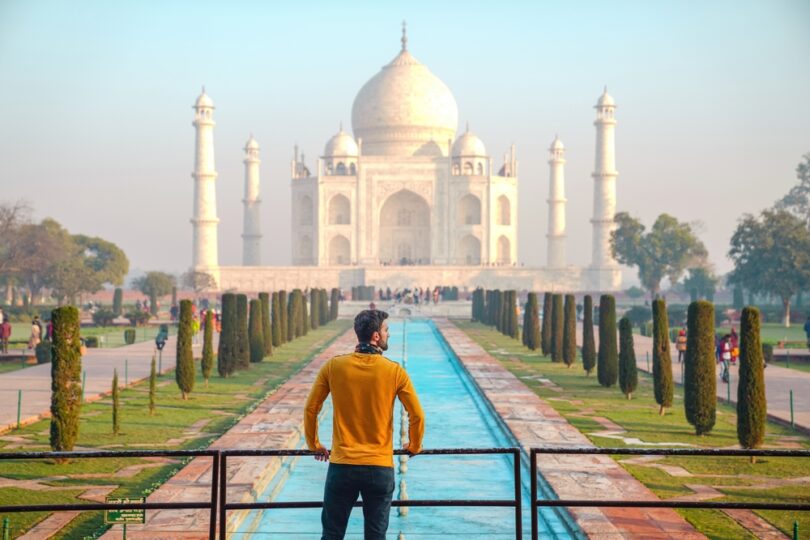

India is one of the most fascinating destinations in the world, offering ancient cities, mountain landscapes, tropical beaches, and fascinating cultural traditions. For first-time visitors especially, the scale and diversity of the country can feel overwhelming. However, with thoughtful planning and the right travel choices, exploring India can be both comfortable and deeply rewarding. From choosing convenient arrival points to discovering destinations beyond the busiest tourist hubs, travelers can experience the country in a way that feels relaxed and enjoyable.

Old Delhi Bazaar
Arrive in Comfort
Choosing the right arrival city can set the tone for your entire trip, minimizing connections, easing jet lag, and putting you close to the experiences you came for. If you’re planning the classic north — Taj Mahal sunrises, Jaipur’s forts, Old Delhi’s bazaars, and Himalayan retreats in Rishikesh or Mussoorie — consider entering at Delhi at Indira Gandhi International (DEL). This puts you within a 3–4 hour expressway drive of Agra and Jaipur, and a short hop to Dehradun for the Garhwal foothills. For a west‑coast start — gateway to Goa’s beaches, Udaipur’s lakes, Mumbai’s Art Deco and Colaba cafés, and monsoon treks in the Western Ghats — fly into Mumbai (BOM), where frequent domestic shuttles make beach‑first or Rajasthan‑light itineraries easy.
If your focus is the south — temple architecture, spice‑rich cuisine, and coastal heritage — Bengaluru (BLR) and Chennai (MAA) are the smoothest entry points. From BLR, it’s an easy link to Coorg’s coffee estates, Hampi’s UNESCO‑listed ruins via Hubballi, and Mysuru’s palaces. From MAA, you’re set for Tamil Nadu’s temple circuit (Mahabalipuram, Kanchipuram, Thanjavur, Madurai) and the French‑influenced promenades of Pondicherry. For backwaters, houseboats, and tea‑carpeted hills, Kochi (COK) is the most convenient gateway to Fort Kochi, Alappuzha, and Munnar without a major metro layover.
For itineraries that arc east or into the Deccan, Hyderabad (HYD) suits travelers chasing biryani trails, Golconda’s fortifications, and quick access to Hampi or Telangana’s forests. Kolkata (CCU) is best for colonial architecture, Bengali cuisine, and onward journeys to Darjeeling, Kalimpong, or Sikkim. If your plan is Gujarat’s crafts and salt deserts, Ahmedabad (AMD) works well for the Rann of Kutch, Gir National Park, and Somnath. For a beach‑first trip, Goa’s Dabolim (GOI) lets you skip big‑city traffic and head straight to the sand.
Cool Accommodations
Finding the right place to stay can make India feel instantly more manageable, especially in its busiest destinations. In Delhi, calm boutique hotels in leafy neighborhoods like Hauz Khas, Nizamuddin East, and Mehrauli offer a welcome break from the city’s bustle while keeping you close to major sites such as Humayun’s Tomb and Qutub Minar. In Mumbai, small heritage properties in Colaba or Fort provide walkable access to the Gateway of India, Marine Drive, and the city’s Art Deco district without the overwhelm of the larger commercial hotels around Bandra Kurla.
In Rajasthan, many travelers opt for restored havelis and smaller palace hotels that blend historic charm with reliable comfort. Jaipur’s Bani Park and Civil Lines neighborhoods offer quiet bases near the Pink City’s palaces, while Udaipur’s lakeside boutique hotels around Lake Pichola give you easy access to boat rides, city palaces, and old‑town strolls. Down south, Kerala’s backwater resorts near Alleppey and Kumarakom are designed for slow, low‑stress days — comfortable rooms, river views, and easy access to houseboat cruises — while the cooler hill stations of Munnar and Thekkady offer cozy plantation stays surrounded by tea gardens and forest trails.
Beach destinations also offer stress‑free options when you choose the right corner. In Goa, quieter stretches like Candolim in the north or Majorda and Benaulim in the south feature mid‑size resorts and guesthouses with direct beach access without the crowds of Calangute or Anjuna. In Tamil Nadu, Pondicherry’s French Quarter has intimate heritage hotels that allow travelers to explore cafés, seaside promenades, and colorful colonial lanes at an easy pace.

Amber Fort, Jaipur
Beat the Crowds
Timing and location matter enormously in India’s most visited destinations, and choosing the right moment can turn even the busiest landmarks into surprisingly peaceful experiences. At the Taj Mahal, arriving just before sunrise not only avoids the tour‑bus rush but also offers soft light and cooler temperatures. In Jaipur, exploring Amber Fort as soon as it opens means wandering through courtyards and ramparts before the heat and crowds build. Similarly, Delhi’s Jama Masjid, Chandni Chowk, and Lodhi Gardens are all best enjoyed in the early morning, when locals are out walking and the energy feels more relaxed than chaotic.
Several popular destinations also have meaningful “quiet corners” that many visitors overlook. In Udaipur, heading to the Ahar Cenotaphs or walking the lanes behind Jagdish Temple gives you a sense of the city without the crowds around Lake Pichola. Mumbai’s major attractions are busy throughout the day, but places like the breezy Worli Sea Face or the lesser‑visited Banganga Tank in Walkeshwar provide peaceful windows into local life. Down south, Hampi’s ruins are spread wide enough that exploring smaller temple clusters — such as the Achyutaraya complex — can feel surprisingly serene even in peak season.
Travelers seeking quieter alternatives within popular regions can also benefit from adjusting their base. Near Agra, the riverside town of Fatehabad offers calmer stays with easy access to Taj‑view viewpoints. In Kerala, Alleppey’s central canals can fill quickly, but staying in nearby Kumarakom or Mararikulam gives you access to the same backwaters with fewer boats and a slower pace. Even in Goa, choosing beaches like Ashwem or Colva instead of Anjuna or Baga makes for a more relaxed experience while keeping you close to all the coastal highlights.
Discover Hidden Gems
Beyond India’s major circuits, many smaller towns and landscapes offer quieter, equally memorable experiences. In Rajasthan, the desert around Jaisalmer reveals a completely different pace of life — camel safaris in the Sam or Khuri dunes at sunset, evenings in mud‑brick villages, and slow walks through the honey‑colored lanes near Jaisalmer Fort. Farther south, the Aravalli foothills hide places like Ranakpur, where the intricate Jain temples sit in a peaceful valley far removed from the crowds of Udaipur or Jaipur.
Travelers interested in history often find that destinations slightly off the main highways deliver the richest rewards. The ruins of Hampi, scattered across boulder‑strewn hills along the Tungabhadra River, offer a sense of scale and solitude that’s rare at larger UNESCO sites. In Karnataka, Badami’s cave temples and the sandstone cliffs of nearby Aihole feel like natural extensions of village life rather than curated tourist zones. On the east coast, Pondicherry’s quieter beaches at Auroville and the shaded lanes of the French Quarter give the city a relaxed, Mediterranean rhythm unmatched by larger urban centers.
Nature lovers will find some of India’s most striking scenery far from its major metros. In the northeast, Meghalaya’s living root bridges near Cherrapunji and Mawlynnong sit deep in rain‑fed valleys where footpaths are often more common than cars. Kerala also has its share of hidden corners: Varkala’s red cliffs and laid‑back cafés feel worlds apart from busier resort towns, while the coastal town of Gokarna in Karnataka offers quiet coves — like Kudle and Om Beach — that reward travelers willing to trade nightlife for peaceful ocean views.

Papri Chaat
Move with Ease
Within major cities, the easiest way to move around is to rely on metros where they exist. Delhi, Mumbai, Bengaluru, and Chennai all have clean, efficient systems that avoid traffic entirely. For everything else, app‑based taxis and auto‑rickshaws work well for short trips, and neighborhoods like Mumbai’s Fort, Udaipur’s old city, and Pondicherry’s French Quarter are compact enough to explore comfortably on foot.
For travel between cities, domestic flights are the fastest option for long distances, while air‑conditioned trains provide a comfortable, scenic alternative on popular routes like Delhi–Agra, Kochi–Trivandrum, or Mumbai–Pune. When visiting regions with multiple nearby destinations — such as the Golden Triangle, Rajasthan, or the Kerala hills — hiring a private car with a driver is often the most flexible and least stressful way to move from place to place.
What Not to Miss — Local Food Experiences
Eating your way through India is one of the best ways to understand its culture, and some of the most unforgettable meals come from simple, low‑stress experiences. In Delhi, it’s hard to beat a plate of chaat in Connaught Place or a fresh parantha in the quieter lanes of Shahpur Jat, while Mumbai offers easy access to street‑side classics like vada pav, vegetable frankies, and fresh seafood along Carter Road. Down south, dosa breakfasts in Bengaluru’s Malleswaram and filter coffee in Chennai’s Mylapore are everyday rituals that travelers can enjoy without navigating hectic markets.
Regional specialties also shine when you know where to look. In Rajasthan, thali restaurants in Jaipur’s C‑Scheme or Udaipur’s old town offer slow, satisfying meals showcasing local vegetarian dishes. Kerala’s backwaters are ideal for tasting mild, coconut‑rich curries and fresh-caught karimeen, often served right at your resort or houseboat. Even Goa, famous for its nightlife, has a gentler side when you settle into a beach shack for prawn curry and poi bread on quieter stretches like Candolim or Benaulim.
Do you have any tips for easy travel in India? Tell us about them in the comments below!